25 Mar How Southern California Companies are Prioritizing Office Space Wellness Design
Southern California has long been synonymous with wellness culture. From the yoga studios to the hiking trails threading through San Diego County, the SoCal lifestyle places a premium on physical health, mental clarity, and intentional living. This same mindset is reshaping how local businesses think about their office environments. It should come as no surprise, then, that employers are seeking wellness design for their office space.
For companies across Los Angeles, Orange County, and San Diego, the office is no longer just a place to get work done. It has become a strategic tool — one that signals company values, supports employee health, and plays a direct role in attracting and retaining top talent in one of the most competitive labor markets in the country. And at the center of this transformation is something more tangible than a wellness app or a meditation stipend: the furniture itself.
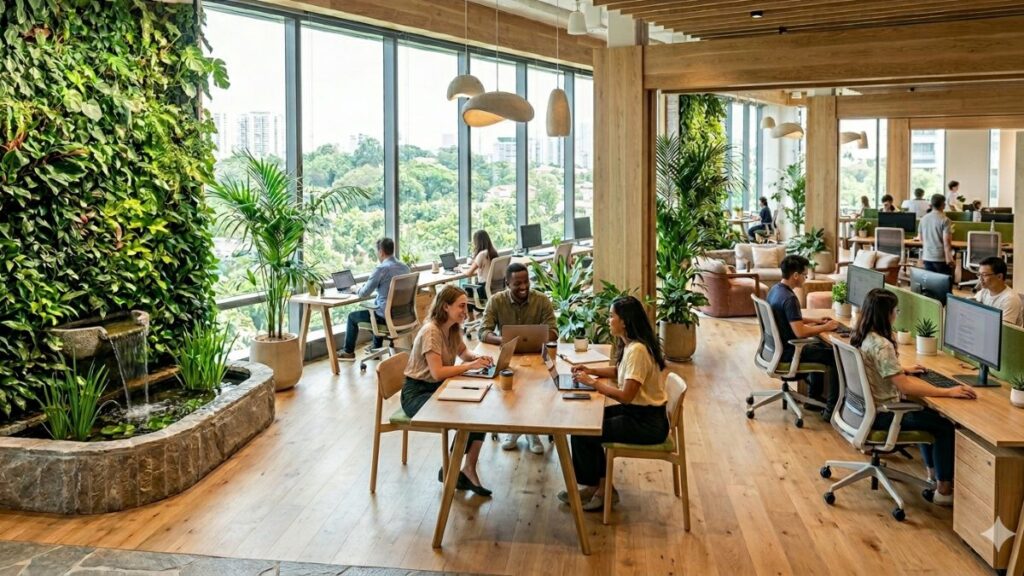
Imagery Sources: Google Gemini & Unsplash
The Connection Between Workspace Design and Employee Wellbeing
 The research is clear. Poorly designed workspaces contribute to chronic back pain, eye strain, fatigue, and elevated stress levels — all of which drive absenteeism, reduce productivity, and accelerate employee turnover. “When people don’t feel good, they simply don’t perform at their best.” Paul Hemp, “Presenteeism: At Work — But Out of It”, Harvard Business Review, October 2004 Conversely, workplaces that are purposefully designed for wellness with the human body and mind in focus produce measurable improvements in focus, morale, and job satisfaction.
For Southern California employers navigating a post-pandemic workforce that now has options — remote, hybrid, or in-office — the stakes are even higher. Employees who commute into an office expect that environment to offer something their home setup cannot. Wellness design is one of the most powerful answers to that expectation.
Ergonomics: The Foundation of a Healthy Office
Any conversation about workplace wellness has to begin with ergonomics. Ergonomic furniture is not a luxury upgrade — it is the baseline investment every employer should make for their team.
Task seating is the most critical starting point. A high-quality ergonomic task chair is core to wellness design. It supports the natural curve of the spine, allows for adjustable lumbar support, and accommodates a wide range of body types and sitting preferences. For SoCal companies outfitting open-plan offices, collaborative studios, or executive suites, investing in contract-grade ergonomic seating from manufacturers built for daily, all-day use is essential.
Monitor positioning and desk height work hand-in-hand with seating. Desks that are too high or too low force employees into compensating postures that accumulate strain over time. Pairing the right desk height with proper chair adjustment is a foundational step that many companies overlook. Just as important is educating employees on how to set up their workstation properly. This commitment to detail can also reduce liability for the employer. Purposeful training incorporated into wellness design demonstrates a commitment to employee health and safety.
The Rise of Active Sitting and Standing Desk Configurations
One of the most significant shifts in workplace furniture over the past decade has been the mainstream adoption of height-adjustable, or sit-stand, desks. What was once considered a niche product for standing-desk enthusiasts is now a standard specification for wellness-conscious companies across the country. And not surprisingly Southern California businesses are leading that charge.
The science behind sit-stand workstations is well established. Alternating between sitting and standing throughout the workday reduces the physical toll of prolonged sedentary behavior, improves circulation. Additionally, it has even been linked to improvements in mood and cognitive performance. For employees already accustomed to an active SoCal lifestyle, a static desk chair for eight hours a day can feel like a mismatch with everything they value outside of work.
Beyond traditional sit-stand desks, there are active seating options as well. Several include saddle stools, wobble chairs, and balance-ball-style seating. These options offer employees the ability to engage their core and shift their posture naturally throughout the day. These solutions work particularly well in creative environments, tech companies, and collaborative studio settings. These environments see employees move fluidly between focused work and team interaction. That said, the benefits can be demonstrated in almost any office space so don’t limit your vision.
Restorative Spaces: Designing for Mental Wellness
 Physical ergonomics addresses only one dimension of employee wellbeing. Mental wellness — the ability to focus deeply, decompress between tasks, and avoid chronic cognitive overload — requires its own wellness design response.
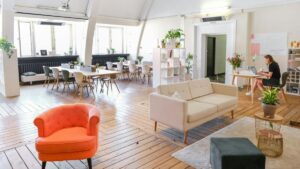
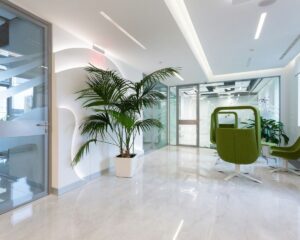
Forward-thinking Southern California companies are carving out restorative zones within their offices. These are dedicated areas away from primary workstations where employees can reset, recharge, and return to their work with renewed clarity. These spaces are furnished deliberately, with soft lounge seating, warm lighting, acoustic privacy panels. Thy also incorporate biophilic elements like plants and natural materials that signal a psychological shift away from task mode.
Acoustic privacy deserves special attention here. Open-plan offices — still the dominant layout across many SoCal industries — are notoriously challenging for focused, deep work. The ambient noise of collaboration, phone calls, and general office activity creates a low-grade stress response that accumulates across the workday. Incorporating phone booths, acoustic pods, and soft-seating enclaves gives employees sanctioned spaces for focus and privacy, directly reducing that cognitive load.
Biophilic Design: Bringing the California Outdoors In
Southern California’s natural environment is one of its greatest assets — and smart office wellness design finds ways to bring that environment inside. Biophilic design, which integrates natural elements into the built environment is no longer an afterthought. It has been shown to reduce stress, lower blood pressure, and improve overall feelings of wellbeing among office workers.
In practice, this means specifying furniture in natural materials — warm wood tones, stone-look surfaces, woven textiles, and leather. Paired alongside living plant walls, natural light optimization, and nature-inspired color palettes, this creates a balanced space. For a SoCal office, this approach feels authentic rather than trend-driven. It reflects the landscape employees already love and live in.
MyOffice, with its deep product knowledge, can help companies select pieces that are not only aesthetically biophilic but also built to perform. In the California climate, accounting for natural light exposure, temperature variation in coastal versus inland locations, and the demands of high-traffic commercial use is a must.
Wellness Design as a Talent Strategy
 Ultimately, wellness-forward office design is not just an HR initiative — it is a business strategy. In Southern California’s competitive hiring landscape, where technology, entertainment, biotech, and creative industries are all vying for the same talent pool, the physical workspace has become a differentiator.
Candidates today evaluate prospective employers holistically. They consider compensation, culture, flexibility — and increasingly, the quality of the physical environment they will spend their working hours in. An office that communicates investment in employee health and comfort sends a signal that resonates deeply. The businesses that succeed here connect with the values-driven workforce that defines the SoCal market.
Companies that partner with MyOffice for wellness design-centered workplaces are not just building better offices. They are building a more compelling employee value proposition, reducing turnover costs, and positioning themselves as employers of choice. This is vital in one of the most dynamic regional economies in the United States.
Conclusion: Ready to Design a Healthier Workplace?
Whether you are outfitting a new headquarters in Downtown San Diego, refreshing a creative studio in San Diego’s East Village, or building out a hybrid-friendly campus in UTC, the right furniture strategy can transform how your team feels — and performs — every single day.
Connect with our team to schedule a complimentary workplace wellness consultation and discover how intentional design can work harder for your people.
If you are ready to wellness design into your office setup consider partnering with MyOffice. Our insights and solutions can guide you in creating a dynamically connected office. Contact us today to begin the process of evaluating how to create the office your employees are seeking.
MyOffice has over 20 years of experience in supporting client’s implementing office solutions. We understand the needs of the modern office environment. Optimizing your workspace through furniture selection and layout is a core competency of ours. We are here to help!